
Mining the Landscape, Then and Now

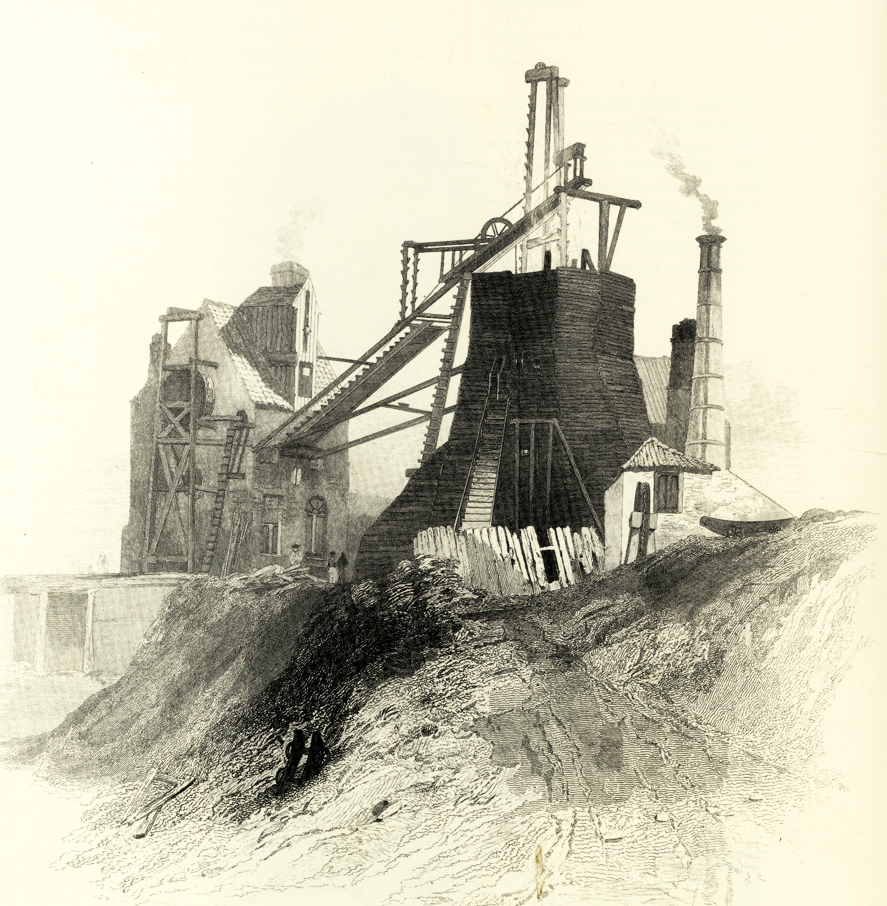
Thomas Harrison Hair, ‘Jarrow Colliery,’ in A Series of Views of the Collieries in the Counties of Northumberland and Durham (London, 1844).
Along the southern banks of the River Tyne, historical mining infrastructure from substantial nineteenth-century collieries at Jarrow, Gateshead, and Hebburn has been repurposed to generate low-carbon heating by harnessing the latent heat in river water, underground mine water, and the air. These novel systems use heat pumps (which are often powered by solar panels) to convert ambient energy in the local environment into hot water that can be distributed over a large area connecting multiple buildings in a single heat network. How can we capture what historical mining landscapes made possible in the past and hold open possibilities for what it might yet become?
Supported by a StACCS Project Grant, in April 2026 art historian Dr Stephanie O’Rourke (St Andrews), philosopher Dr Alice Murphy (St Andrews), artist Paul Dolan (Northumbria University), and curator Lizzie Jacklin (Laing Art Gallery & Hatton Gallery, North East Museums) held a workshop to explore how these new sustainable energy systems interact with historical mining infrastructure and historical ways of representing Newcastle’s mining landscapes. They examined some of the earliest artistic representations of coal mining at the Laing Art Gallery in Newcastle and also visited the Viking Energy Network Jarrow (VENJ) Energy Centre, which uses thermal energy from the Tyne to generate hot water for a low-carbon district heating network. The workshop toured multiple abandoned mining sites along the Tyne that have seen been reclaimed by nature, too, considering how such sites interact with the present-day landscape.